
Madison County Weekly Arrest Sources
There is no official Madison County Sheriff blotter. No page offers a multi-day booking range either. The sheriff's News page posts releases from time to time. Those are episodic. Nobody should mistake them for a daily or weekly arrest log. The live RPS roster helps with current inmates, new book-ins, and recent releases. It makes no claim to being a historical record of Madison County arrests.
For a week-scale look back, the Madison County Record is the strongest local option. Its print and e-editions have carried a standing feature. The banner reads "Madison County Jail Log: Book-Ins from the Previous Week." That retrospective format suits anyone tracing Madison County recent arrests. It covers several days. Keep in mind it is editorial, not the county's controlling custody record.
Read the Madison County Blotter
A paper dated Thursday may report arrests from earlier in the week or the week before. So the issue date, the arrest date, and any court date can all differ. Pull each date from the office that owns it before you treat it as settled.
- Open the Madison County Record e-editions and choose the issue after the likely arrest week.
- Find the jail-log heading and read its stated date scope.
- Compare the name and book-in date with the sheriff roster.
- Use ARCourts for the later case and disposition.
- Request the county record if it has rolled off public pages.
For today’s intake, use the Daily Arrest Report. The newspaper is retrospective, not a live custody check.
Madison Weekly Arrest Log Fields
The prior-week label is standard, but no single field layout covers every issue. One week may print more detail than the next. Read only what the chosen edition actually shows, and leave the rest to official channels.
| Item | Use and limit |
|---|---|
| Name | Match with a date or other identifier. |
| Book-in date | Places intake in the prior-week range. |
| Charge text | An charge, not a conviction. |
| Agency or place | Confirm because place can reflect residence. |
| Photo | May appear in a story; not assured in the log. |
| Issue date | Locates publication, not arrest time. |
The e-edition landing page is shown below.
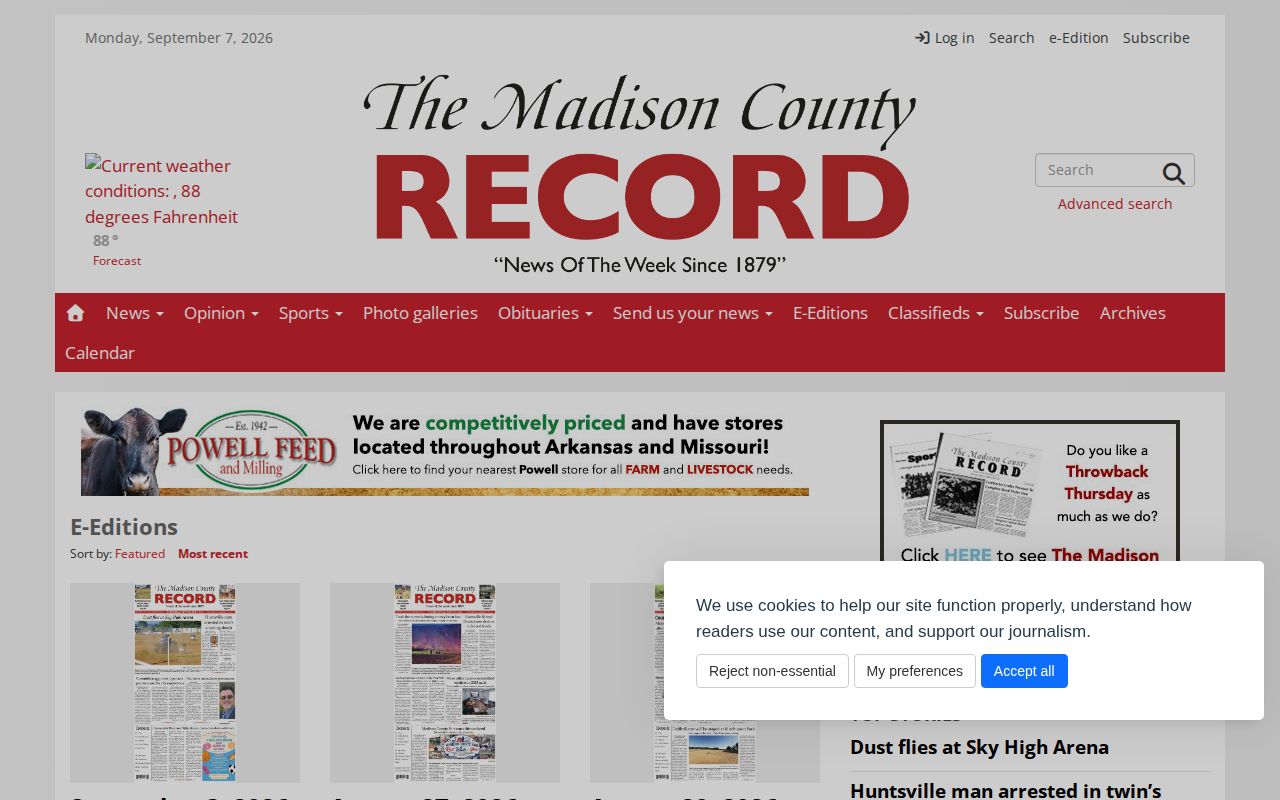
This landing page is more durable than a changing issue-file address.
Weekend Arrests Enter Later Issues
A weekly paper groups book-ins into one issue. It does not update each time someone enters the jail. That means weekend, holiday, and late-cycle arrests often land in the next printed issue. Nothing guarantees that every booking appears. The Crime section does not mirror the full jail log.
One long list does not mean a crime surge. Its length can reflect the number of days grouped. Timing of the issue, delayed placement, and column space also play a part. For current custody, the live roster wins. For a past local reference, the weekly edition holds its value.
Note: Compare dates inside an item rather than treating one issue’s entry count as a trend measure.
Madison Arrest Archives and Retention
E-editions reach back further than the RPS New Inmates and Recent Releases views. Even so, they form no guaranteed full archive of Madison County arrests. Search depth depends on which issues survive. It also turns on indexing and what the paper chose to print. A missing newspaper item does not mean no arrest occurred.
Once the live views roll off, try three routes. Search ARCourts. Call the Circuit Clerk. Or send a focused Arkansas FOIA request to the sheriff. Name the person, a tight date range, and the booking or release fields you need. Active investigations, juvenile matters, and sealed or protected data may be withheld. The Madison County Circuit Clerk source offers that contact path.
The clerk routes circuit records after a booking lead becomes a court case.
Madison Arrest News Is Selective
The Madison County Record Crime section runs event-based stories rather than a complete arrest feed. A story can add context a roster lacks. Still, editors pick which arrests get coverage. A photo in one story reflects an editorial choice, not a promise of images for every booking. The newspaper home page is represented below.
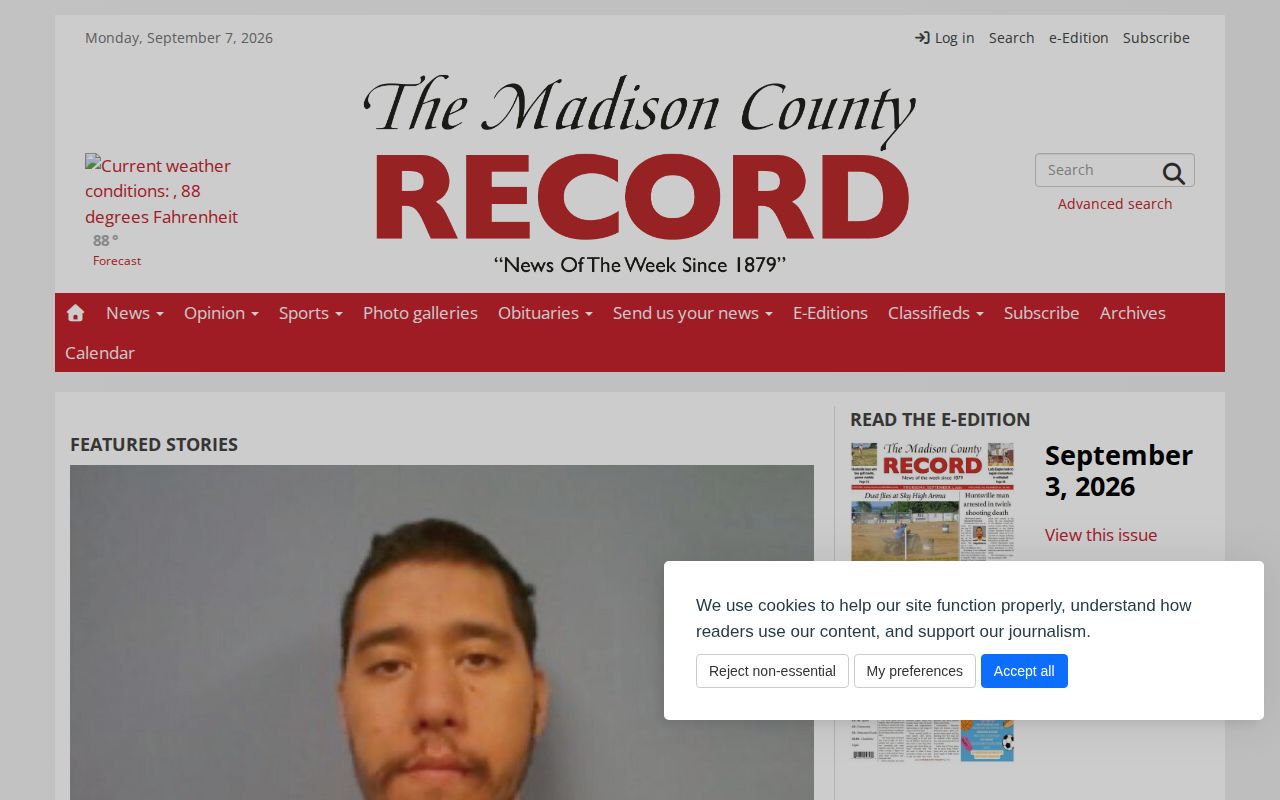
Local color is the paper's strength. Official custody and court data still come first. Unofficial booking aggregators may list more arrests, but their entries can sit stale, duplicated, or detached from how a case ended. Trust the roster, the sheriff's response, and the court docket ahead of any copycat site. No mugshot gallery is hosted here.
Reconcile Madison Arrest Dates
Start with the person, not just a charge phrase. Write down the issue date, the reported book-in date, any roster time, the court name, and the case number. Keep each date tied to its own event. Booking, first appearance, bond review, filing, plea, dismissal, and judgment can fall on different days entirely.
When two sources disagree, ask the office that owns the fact. The sheriff controls booking and custody fields. The court controls how a case resolves. The paper controls only what it printed. No third-party copy can override an official correction or a sealed case.
Trace Older Madison Arrest Records
Older arrests take patience. The weekly log is just one layer in a dated trail. Treat it as a starting point rather than a full archive. Begin with the issue that should hold the prior week. Then widen the search by one issue on each side. Holidays and late placement can push an item into a neighboring edition.
Skip the saved PDF address. Issue filenames change, so use the e-edition landing page and navigate from there. When you spot an item, write down the page number and the issue date. Those two details anchor everything that follows.
Cross-check the paper against live roster data. The Current Inmates tab can hold a booking older than the New Inmates range. Recent Releases gives arrest and release times, but only for its short window. Neither tab works as a historical index for Madison County arrests. If every roster tab comes up blank, the newspaper can still back a focused request. It just cannot prove that anyone is currently in custody.
Send the sheriff a narrow request. Name the person and give an approximate date. Ask for the booking sheet and the arrested-by field. Add the intake charge, the bond, and the court routing. Include the release date as well. The office may redact protected data or withhold exempt material, which is normal. An empty online result does not mean the county record was destroyed.
Court records come next. ARCourts lets you search by participant, county, court location, case number, or citation. A roster court date can change, and short charge text may differ from the count actually filed. So record the case number. Then keep each docket event separate from the arrest date. First appearance, bond hearing, and plea are distinct steps. So are dismissal and nolle prosequi. Judgment, probation action, and failure to appear count as separate steps too.
For a circuit matter, try the Madison County Circuit Clerk. The clerk can route a request when the online docket lacks a document. Keep the ownership straight. The court holds the disposition. The sheriff holds booking and custody. The paper holds only the fact that it published an item. That chain keeps a news line from turning into a false claim about present custody.
Secondary sites may advertise a month of bookings, complete with filters and counts. Those tools are unofficial. A stale photo can linger there. Entries get duplicated, corrections get missed, and dismissals vanish. Use them as leads, never as replacements for the sheriff, VINE, and the court. No outside count deserves the label of crime trend. That label needs a defined period and official statistics behind it.
Archive gaps have many causes. An issue may never have been digitized. An index may fail to read the page. An item may sit under another heading, or the paper may have skipped the booking entirely. The careful conclusion is simply that no matching published item exists. Saying no arrest occurred is too broad a leap.
Sealed records follow a different path. Use the court and Arkansas Crime Information Center process rather than reposting an old copy. A roster typo, a newspaper error, and a sealing order are three different problems. Route each correction to the source that controls it, and keep the official response on file.
Treat the arrested-by field with care. Huntsville, St. Paul, Hindsville, or another named town may just be an address. It does not always mark where the arrest happened. Confirm the booking with the sheriff or the police record that holds it. The county roster can list an arrest made by a city, state, or outside agency. The weekly source groups book-ins across several days and stamps each issue with a firm date. Its gaps matter too: no completeness guarantee, no set photo rule, and no live release status. Note: Save the issue date, verify the official booking, then track the case through the courts.
Public Record Search
Sponsored Results